In the field of non-invasive medical aesthetics, anti-aging technologies are constantly evolving. Two popular ultrasound-based treatments—Ultherapy and Ultrasound Cannon—are often compared by those seeking beauty improvements. Many people wonder what the differences between these two treatments are and which one offers better results. In fact, there is no absolute “better” option; both have their unique strengths. Specifically, if you prefer a gentle anti-aging experience, Ultrasound Cannon may be more suitable; if you need stronger skin firming, Ultherapy is likely the better choice. This article will detail their differences to help you make an informed decision.
1. Core Principles: Similar Foundations, Different Focuses
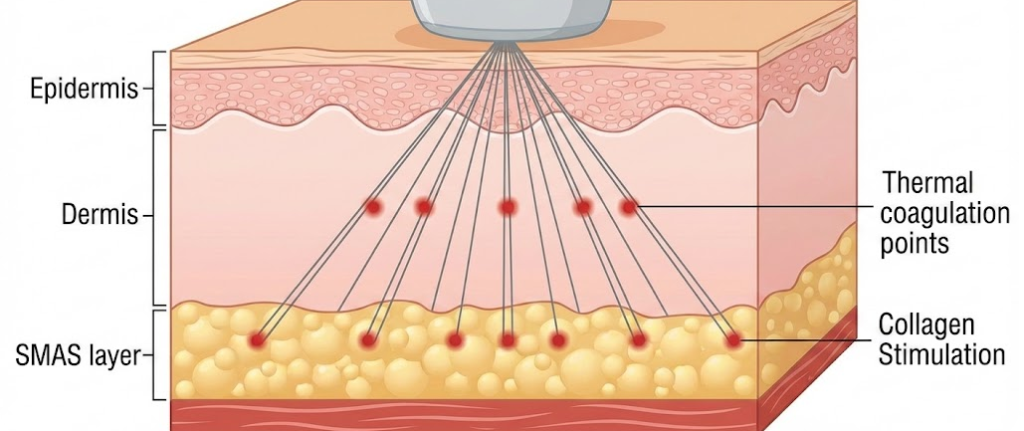
Both Ultherapy and Ultrasound Cannon belong to the category of ultrasound-based anti-aging treatments. They work by delivering high-intensity focused ultrasound (HIFU) to the deeper layers of the skin—dermis, subcutaneous fat, or SMAS fascia. This stimulates the contraction of collagen fibers and promotes the regeneration of new collagen, resulting in firmer skin, reduced wrinkles, and improved contours. However, there are significant differences in their energy delivery methods and focal points, which directly affect their outcomes and user experiences.
Ultherapy, commonly referred to as “Ultrasound Knife,” uses a single-point focused ultrasound approach. Its energy is concentrated in a small area, allowing it to precisely target the SMAS fascia—the layer primarily responsible for skin sagging. By directly stimulating this layer and promoting massive collagen regeneration, Ultherapy achieves a highly effective and precise firming effect.
Ultrasound Cannon, on the other hand, employs a multi-point, multi-layer energy delivery system. It covers a larger area and can affect multiple skin layers simultaneously. Its energy is relatively mild and distributed more evenly, reducing the risk of excessive stimulation to any one area. While still promoting collagen regeneration, Ultrasound Cannon focuses more on overall skin lifting and smoothing, making the treatment process gentler and more comfortable.

2. Effect Comparison: Gentle Anti-Aging vs. Strong Firming
The most notable difference between Ultherapy and Ultrasound Cannon lies in their effects. As the names suggest, Ultrasound Cannon is better at providing a gentle anti-aging experience, while Ultherapy is more effective at achieving strong skin firming results.
Ultrasound Cannon: Gentle and Comfortable, Ideal for Daily Use
Many people prefer Ultrasound Cannon due to its gentle treatment and natural results. Its mild energy does not cause noticeable discomfort or tingling during the procedure, and there is virtually no recovery time—you can return to your daily activities immediately after treatment. In terms of effects, Ultrasound Cannon focuses on “overall improvement”: it effectively reduces mild to moderate skin sagging, smooths fine lines, brightens the skin tone, and makes the facial contours look softer and more natural.
It is especially suitable for people with mild anti-aging needs, such as those in their 25s to 35s who are experiencing initial signs of skin laxity, fine lines, or dullness. For those with sensitive skin or who are concerned about pain, Ultrasound Cannon is an excellent choice. Its effects are gradual and natural, and after just 1 to 3 treatments, you can see noticeable improvements without appearing “over-treated”.
Ultherapy: Powerful Firming Treatment, Suitable for Severe Skin Sagging
Compared to Ultrasound Cannon, Ultherapy’s greatest advantage lies in its strong and direct firming effects. Thanks to its single-point high-energy focusing technology, it can effectively tighten the SMAS fascia layer, essentially “repositioning” the sagging skin from within. This treatment is particularly effective at addressing severe skin sagging in areas such as the jowls, cheeks, and neck. At the same time, it can also reduce deep wrinkles, making the skin look more compact and elastic.
It should be noted, however, that the high energy used in Ultherapy may cause some discomfort during the treatment—some people may experience noticeable tingling, but this is generally within a tolerable range. After the treatment, the skin may also become slightly red and swollen, but these effects usually subside within 1-3 days. Ultherapy is especially suitable for people over 35 years old who have significant skin sagging, or those who require strong firming results and are willing to tolerate some side effects. The effects of Ultherapy are long-lasting; one treatment can provide benefits for 1-2 years.
3. Other Key Differences to Help You Make a Choice
In addition to the main differences in effectiveness and patient experience, there are several other aspects to consider when comparing Ultherapy and Ultrasound Cannon, which can help you make a more informed decision.
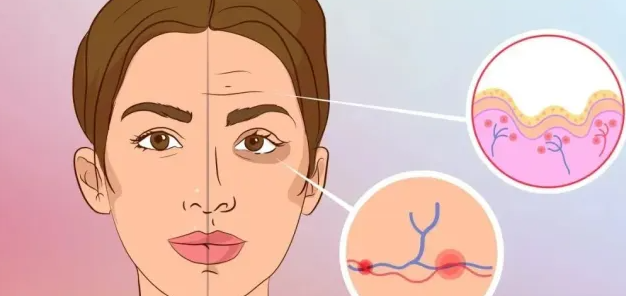
Firstly, in terms of the areas treated: Ultherapy focuses primarily on specific areas with severe sagging, such as the jowls, neck, and cheeks; Ultrasound Cannon, on the other hand, can treat the entire face, neck, and even the eye area, providing comprehensive anti-aging benefits.
Secondly, regarding the frequency of treatments: Ultherapy requires less frequent sessions—once a year is usually sufficient; Ultrasound Cannon, however, needs to be performed 1-3 times a year depending on individual skin conditions to maintain optimal results.
Thirdly, in terms of the target audience: Ultrasound Cannon is better suited for mild anti-aging treatments, sensitive skin types, and people who are concerned about pain; Ultherapy is more appropriate for those with severe skin sagging, deep wrinkles, and a strong need for firming.
4. Final Recommendation: Choose Based on Your Own Needs
In summary, there is no clear winner between Ultherapy and Ultrasound Cannon; the key is to select the option that best meets your anti-aging goals. If you prefer a gentle and comfortable treatment experience and your main concerns are mild skin laxity and fine lines, Ultrasound Cannon is a good choice—it offers a natural and subtle anti-aging effect. If you are looking to address severe skin sagging and achieve long-lasting firming results, Ultherapy is more suitable—it can help you restore a tight and youthful facial contour from within the skin.
No matter which treatment you choose, it is crucial to select a reputable medical aesthetics institution and a professional doctor for the procedure. Only in this way can you ensure the safety and effectiveness of the treatment and achieve the desired anti-aging results.