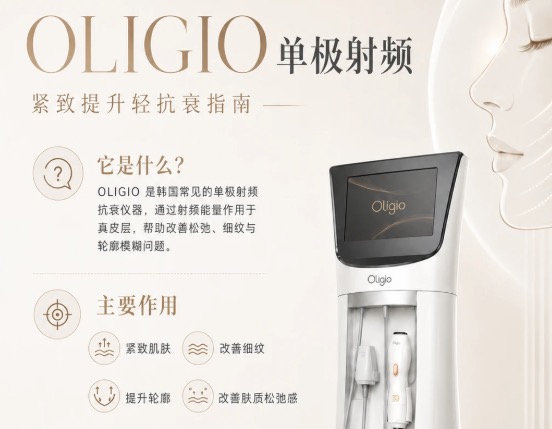
▲ A comprehensive comparison between South Korea’s Thermage and Oligio
✈️ If you have undergone cosmetic procedures in South Korea, you have probably heard of “Thermage” – that renowned radiofrequency treatment device that has become extremely popular in East Asia. However, in recent years, a new device called Oligio has begun to frequently appear on forums such as Dcard, PTT, and various cosmetic treatment discussion boards. Some people describe it as “the evolved version of Thermage,” while others claim it is a “more cost-effective alternative.” So what exactly are the differences between these two devices? Is it necessary to use both Thermage and Oligio? Which one is more suitable for you? This article will help you understand all these questions clearly.
💡 Before delving into a detailed comparison, it’s important to note one key point: both Thermage FLX and Oligio belong to the category of RF devices. Both work on the principle of using RF energy to heat the Collagen in the dermis, stimulating new cell growth and thereby achieving a tightening and lifting effect. However, there are significant differences between the two in terms of technical details, treatment depth, patient experience, durability of results, and price. Let’s examine these aspects one by one.
I. Basic concepts of Thermage and Oligio
🔍 Thermage FLX is a monopolar radiofrequency device developed by the American company Solta Medical. The fifth-generation FLX model was launched in 2018, and it is currently one of the most recognized radiofrequency treatments on the market. This device utilizes “monopolar radiofrequency” technology, which allows energy to penetrate deep into the skin – reaching both the dermis and subcutaneous tissues – thereby heating the Collagen in these layers and promoting its regeneration. The treatment area is highly flexible, allowing it to be applied to various parts of the body, including the face, around the eyes, the neck, and more.
🔍 Oligio (pronounced Oh-lih-jee-oh) is a multi-polar radiofrequency device developed by the South Korean brand Gluemold. It was approved for use in South Korea in 2019 and began to be marketed shortly thereafter. In recent years, it has gained widespread popularity among Asian consumers, thanks to the growing interest in medical aesthetics in South Korea. Oligio utilizes both “multi-polar radiofrequency” and “microcurrent” technologies to act on multiple layers of the skin, offering benefits such as “full-face lifting, improvement of Double Chin, and contour tightening.”
📋 Below is a comparison of the basic specifications of these two devices:
| project | Thermage FLX | Oligio |
|---|---|---|
| Origin of the brand | Solta Medical in the United States | South Korea’s Gluemold |
| Type of technology | Monopolar RF | Multipolar RF + Microcurrent |
| Depth of effect | 2.0–4.3mm (from the deep dermis to the subcutaneous layer) | 1.5–3.0mm (mainly within the dermis layer) |
| Primary effects | Full-face tightening and wrinkle reduction | Contour lifting, reduction of Double Chin, overall tightening |
| Long-lasting effects | 1.5 to 2 years | 1 to 1.5 years |
| Pain | Moderate to strong effect (local anesthesia required) | Mild to moderate (anesthesia may not be necessary) |
| Recovery period | Almost no need at all (slight redness may occur within 1–3 days). | No need for recovery |
| Reference prices in South Korea | Starting from ⩱1,800,000 to ⩵5,000,000 | Starting from ⩢300,000 to 800,000 |
II. In-depth Analysis of Technical Principles
⚡ The principle of centum core’s monopolar radiofrequency technology: Monopolar radiofrequency involves current flowing from the treatment probe through the skin and back to the ground pad attached to the patient’s back. This approach allows energy to penetrate “vertically,” reaching deeper layers of the dermis and the SMAS fascia. It is precisely because of this deep penetration that many patients describe the lifting effects of centum core on the face as something they can instantly feel—their faces seem to be being lifted. In addition, centum core FLX utilizes AccuREP technology to instantly monitor the treatment response to each pulse, ensuring more precise energy delivery and reducing the risk of uneven heating.
⚡ The multi-pole RF technology of Oligio: Multi-pole RF refers to the use of multiple electrodes on the same treatment probe, with current flowing between these electrodes to form a circuit. The advantages of this approach are as follows: 1. The energy is distributed more evenly, reducing the risk of burns caused by hotspots; 2. The discomfort experienced during treatment is relatively mild; 3. The treatment process is faster (usually, a full face treatment can be completed in 40–60 minutes). Oligio also incorporates Micro Current technology, which can stimulate muscle contraction and help to tighten the skin’s contours—a feature that Thermage does not offer.
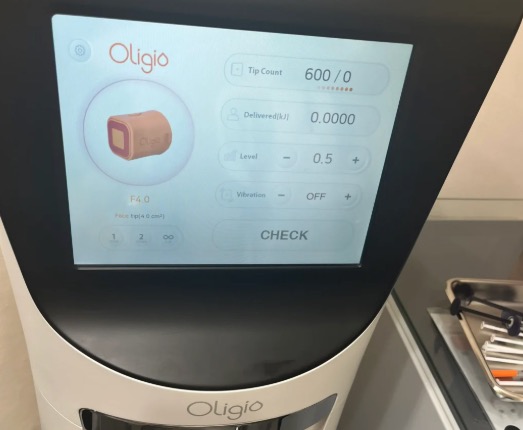
▲ Actual view of Oligio multi-polar radiofrequency device
🎯 Key differences: Thermage is more suitable for patients who need “deep lifting” treatments, as its energy penetrates deep into the dermis and even the subcutaneous tissue, effectively addressing more severe signs of sagging. Oligio, on the other hand, is better suited for patients who want to “maintain their current appearance” or have only mild sagging. Its energy acts at a shallower depth, resulting in a more comfortable treatment experience, and it can be used more frequently (it is recommended to use Oligio every 3–6 months, while Thermage is usually suggested every 12–18 months).
III. Effect Comparison: Lifting, Tightening, and Long-lasting Results
✨ The effects of Thermage: Based on numerous clinical studies and extensive feedback from real users, the main benefits of Thermage FLX include: 1. An improved sense of skin tightness throughout the face; 2. More defined facial contours (reduction in Nasolabial Fold Correction and Marionette Line Correction); 3. Improvement of fine lines around the eyes (especially in the 4.0cm² treatment area around the eyes); 4. Toned neck and jawlines. These effects typically become apparent within 1 to 3 months after treatment and reach their peak after 6 months. In terms of durability, most users report that the results last for 1.5 to 2 years, depending on an individual’s Collagen metabolism rate.
✨ The effects of Oligio: Oligio’s core strengths lie in its “well-defined contours” and “quick results.” Many patients report that on the same day of treatment, they can already notice their facial contours becoming tighter, their Double Chin diminishing, and their face shape becoming more IPCHEA. Due to the wider heating area provided by multipolar radiofrequency, the even heating leads to an overall improvement in skin texture (reduction in Pores, more even skin tone), although the deep lifting effect is not as significant as that of Thermage. The duration of these effects ranges from 1 to 1.5 years; some users have reported that after 6 to 8 months, the effects begin to fade, requiring another treatment session.
📊 Excerpts from genuine reviews of Dcard and PTT:
💬 On the South Korea cosmetic surgery forum on Dcard (information source: Dcard posts from 2025–2026), many Taiwanese girls shared their experiences comparing the two treatments: “After having Thermage, I definitely felt that my face was tightened, but the process was really painful – I had to use anesthesia. As for Oligio, I use it for maintenance; it’s much cheaper, less painful, and can be done every few months, making it more suitable for regular skincare.” Another PTT user mentioned: “I asked the doctor at the clinic, and he suggested that if you have obvious signs of skin laxity, it’s best to start with Thermage to get initial results and then use Oligio to maintain them – this way, it’s the most cost-effective option.”
IV. Comparison of Recovery Period and Postoperative Reactions
⚠️ Postoperative reactions to Thermage: Thermage is considered a procedure that requires virtually no recovery period. However, due to the high intensity of the treatment, some patients may experience the following reactions after the procedure:
⚠️ 1. Mild redness: Most patients experience slight reddening of the face 1–3 days after the procedure, which usually subsides within 24 hours.
2. Slight swelling: This is particularly common around the eyes or cheeks and typically resolves within 48 hours.
3. Sensitivity to touch: In the 2–4 weeks following the surgery, the skin may feel slightly tingling or numb, which is a normal reaction.
4. In very rare cases (about 3–5% of patients), temporary indentations or a burning sensation may occur, often due to excessive energy usage or improper surgical techniques.
Post-surgery recommendations:
– Avoid strenuous exercise for 48 hours.
– Stay away from hot environments (such as saunas or hot baths) for at least 1 week.
– Ensure proper hydration and sun protection.
⚠️ Post-treatment reactions to Oligio: The post-treatment effects of Oligio are relatively mild, which is precisely why it has gained the favor of those who pursue “maintenance-level skincare”:
1. Almost no redness or swelling: Most patients can apply makeup, go to work, or go out immediately on the day of treatment.
2. Possible mild redness: Slight reddening may occur within a few hours after treatment, but it usually subsides within 2–4 hours.
3. Occasional stinging sensations: In some areas where energy is concentrated during treatment, there may be brief stinging sensations, but the intensity is much lower than that of Thermage.
4. No need for dressing changes or special care; regular skincare routines can be continued as usual.

▲ After treatment with Oligio, almost no special recovery period is required.
💡 A comprehensive guide to post-treatment precautions:
💡 Whether you choose Thermage or Oligio, it is recommended to follow these guidelines: 1. Strengthen moisturization for 2 weeks after the procedure to prevent excessive skin dryness, which could affect collagen regeneration; 2. Use high-factor sunscreen (SPF50+) carefully, as the skin becomes more sensitive to ultraviolet rays after radiofrequency treatment; 3. Avoid alcohol consumption within 48 hours after the procedure to prevent increased facial redness; 4. If persistent redness or abnormal swelling occurs, contact your doctor immediately. For more detailed information on post-treatment care for medical aesthetics in South Korea, refer to this guide on booking appointments with Dermatology clinics in South Korea: the most comprehensive comparison and pricing guide available online, with one-click synchronization for locations in Busan, Myeongdong, and Jeju Island. It includes all necessary precautions for consultations.
V. Comparison of actual prices in South Korea
💰 South Korea is one of the largest markets for Thermage and Oligio in the world. The competition among clinics is fierce, and price transparency is relatively high. The following are reference prices compiled based on market data for 2025–2026 (sources: Gangnam Unni, Babitalk platform; actual prices may vary depending on the clinic’s current rates).
💰 Reference price of Thermage FLX in South Korea:
💰 1. Full face (600 hairs): ⩺91,800,000 – ⩺2,500,000; 2. Full face (900 hairs): ⩺92,500,000 – ⩺4,000,000; 3. Full face (1,200 hairs): ⩺93,500,000 – ⩺5,000,000; 4. Eye area (100–200 hairs): ⩺9,500,000 – ⩺10,000,000; 5. Neck (600 hairs): ⩺9,150,000 – ⩺2,500,000. If you want to understand in more detail how the number of hairs used in Thermage treatments affects the price, we highly recommend reading this in-depth analysis: “Why is the price of Thermage treatments in South Korea three times different? What exactly are the differences between treatments costing 3 million and 9 million South Korean won?” This article provides very detailed explanations.
💰 Reference price for Oligio in South Korea:
💰 1. Single treatment for the entire face: ₩300,000 – ₩600,000; 2. Treatment for the entire face (including the neck): ₩500,000 – ₩800,000; 3. Package of 5 treatments: ₩1,200,000 – ₩2,500,000; 4. Some clinics offer a combined package of “Thermage + Oligio”, which is usually 10–20% cheaper than purchasing these treatments separately.
| Treatment plan | Location | Reference prices in South Korea | Maintenance cycle |
|---|---|---|---|
| Thermage FLX | 900 treatments for the entire face | Starting from ⩡2,500,000 to ⩄4,000,000 | 12 to 18 months |
| Thermage FLX | around the eyes | Starting from ⩉500,000 to ⩉1,000,000 | 12 months |
| Oligio | Full face | Starting from ⩢300,000 to ⩥600,000 | 3 to 6 months |
| Oligio | Full face + neck | Starting from ⩉500,000 to ⩉800,000 | 3 to 6 months |
| The combination of Thermage + Oligio | Full face | Starting from ⩡2,200,000 to ⩣4,500,000 | It depends on the specific requirements. |
💡 Price notes: The above ranges are merely market references, and there can be significant differences among various clinics. Clinics located in high-end areas such as Apgujeong and Cheongdam generally charge higher prices; whereas clinics in less prominent areas of Gangnam, as well as those surrounding Seongsu and Hongdae, tend to be more affordable. If you wish to understand the actual fees for Thermage treatments at different clinics, you may refer to the comprehensive reviews and experiences shared by users on Lumiin Dermatology’s Thermage services, which start from 1.8 million Korean won. These are real testimonials from recent patients.
VI. Target Audience Analysis: Who should choose Thermage? Who is suitable for Oligio?

▲ Choose the appropriate treatment plan based on the degree of skin laxity.
👤 The ideal candidate for the Thermage FLX treatment:
👤 1. ✅ Those who are 35 years old or older and experience noticeable facial relaxation, Nasolabial Fold Correction, or Marionette Line Correction; 2. ✅ Those who expect immediate results and wish for long-lasting effects (1.5–2 years); 3. ✅ Those with fine lines around the eyes or drooping eyelids (for whom specialized probes for the eye area are used); 4. ✅ Those with sufficient budget and willing to invest in more profound collagen regeneration treatments; 5. ✅ Those who are not bothered by mild discomfort and can tolerate local anesthesia during the treatment process.
👤 The ideal candidate for Oligio:
👤 1. ✅ Aged 25–40, with mild to moderate skin laxity, primarily seeking to maintain the definition and firmness of facial contours; 2. ✅ Having a limited budget, hoping to maintain skin health at a relatively low cost; 3. ✅ Having low tolerance for pain, preferring more comfortable treatment experiences; 4. ✅ Leading a busy lifestyle and needing to return to work or social activities immediately after the procedure; 5. ✅ Having previously undergone Thermage treatment and now seeking a “maintenance” type of procedure to extend its effects.
🚫 Situations where neither option is suitable:
🚫 1. Pregnant or breastfeeding; 2. Presence of metal implants on the face (such as bone plates or screws); 3. Active dermatitis, infections, or open wounds; 4. Heart disease or the use of a pacemaker; 5. A history of allergy to radiofrequency treatment. If you fall into any of these categories, it is recommended that you consult a Dermatology specialist before making a decision.
7. Can one use both Thermage and Oligio at the same time?
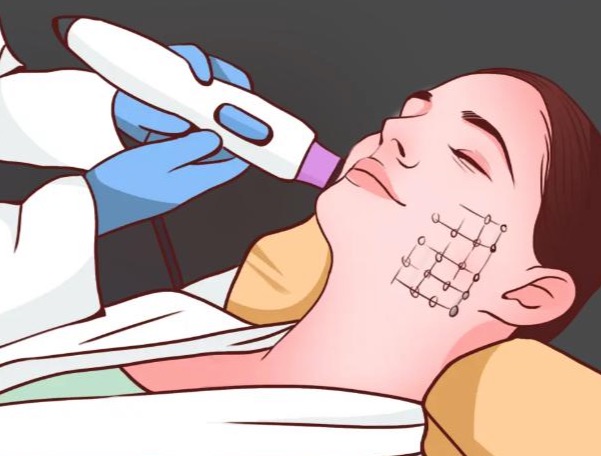
🔥 The feasibility of combined treatments: This is a question that many people have. The answer is yes, but there needs to be an interval between the treatments. Most South Korean doctors recommend the following: 1–2 months after Thermage treatment, one can undergo Oligio treatment to “consolidate the results”; or alternatively, start with a mild Oligio treatment and then proceed with a Thermage session 4–6 weeks later for more intensive Lifting. It is not recommended to perform these two treatments on the same day, as the accumulation of radiofrequency energy may cause excessive local heating and increase the risk of side effects.
🔥 Combination strategy recommendation: Currently, a popular “layered anti-aging” approach is being adopted by high-end clinics in South Korea: 1. Treat with Thermage FLX once a year for deep collagen regeneration; 2. Use Oligio every 3–4 months to maintain firm contours. By combining these treatments, Thermage focuses on regeneration while Oligio serves as a maintenance measure, ensuring a more balanced overall cost compared to using only Thermage alone.
💡 For Taiwanese girls who are planning their first experience with Thermage in Seoul, you can refer to this article: “First-Timer’s Guide to Thermage in Seoul: Expenses, Procedures, and Personal Insights.” It provides a very detailed itinerary and breakdown of costs, making it especially useful for those going for the first time.
🔥 Which South Korean clinics offer both Thermage and Oligio? The vast majority of Dermatology clinics in South Korea are equipped with both devices, allowing patients to receive personalized recommendations from doctors during a single consultation based on their individual skin conditions. If you’re interested in reviews of clinics in Gangnam, you can read the in-depth evaluation “Gangnam ELEV Dermatology Thermage Reviews: Does the Chief Physician at Apgujeong Anti-aging Institute perform the treatments personally?” to learn more about the actual experience of receiving treatment there.
VIII. The process of visiting a Dermatology clinic for the first time in South Korea
🏃 Step 1: Make an appointment in advance (it is recommended to book 1–2 weeks in advance): Popular Dermatology clinics in South Korea are often fully booked. It is advised to make an appointment through the BeautsGO platform, WeChat, or LINE, and clearly indicate the treatment you wish to receive (Thermage or Oligio) as well as the desired schedule.
🏃 Step 2: In-person consultation at the clinic (approximately 30–45 minutes): Upon arrival, you will first fill out a consultation form. The doctor will then examine your skin condition, ask about your previous treatment history, and determine which treatments are suitable for you as well as the appropriate energy settings. This step is extremely important, as it is crucial for deciding on the best treatment plan for you.
🏃 Steps 3–4: Pre-treatment preparations and procedures: For Thermage, topical anesthetic needs to be applied and left on for 20–30 minutes; Oligio usually does not require anesthesia. Treatment duration: 45–90 minutes for the entire face with Thermage (depending on the number of treatment sessions), and 40–60 minutes for Oligio. You can inform your doctor at any time during the procedure about how you are feeling, and the energy level can be adjusted if you experience any discomfort.
🏃 Step 5: Post-treatment Care: The clinic usually provides soothing face masks or cold compresses, and the nurse will explain the necessary precautions. After the Thermage treatment, it is recommended to increase moisturization and sun protection; after the Oligio treatment, there are basically no special restrictions, and you can resume your normal activities immediately. If you don’t know how to make an appointment, we recommend checking out the most detailed guide to making appointments available online for Dermatology services in South Korea: a comparison and price-checking guide for Busan, Myeongdong, and Jeju Island, which includes step-by-step instructions.
IX. Authentic Discussions and Reviews on PTT and Dcard
💬 Discussions on the PTT Beauty forum (source: PTT Beauty forum discussions in 2025): In the highly active discussions on South Korea’s medical beauty industry on PTT, opinions regarding the comparison between Thermage and Oligio can be roughly divided into two camps. Those who support Thermage argue that “the effects are indeed different; the unique sensation experienced after Thermage treatment is something that Oligio cannot provide.” On the other hand, supporters of Oligio claim, “I no longer choose Thermage because Oligio is much cheaper. I just use it during my regular treatments, and I find that the long-term maintenance results are better with Oligio.”
💬 The reputation of South Korea’s medical beauty community on Dcard (source: Dcard post from 2026): There is a highly popular sharing that details the entire process experienced by the same user who first underwent Thermage treatment and then continued with Oligio treatments: “After the Thermage procedure, I really felt that my face had become tighter, but the effects seemed to start fading after more than a year. Later on, whenever I went on business trips to Seoul, I would receive an Oligio treatment, approximately once every three months. The cost was not high, and I noticed that the effects remained stable; the contours of my face did not loosen again.” This experience received over 300 likes on Dcard and is currently one of the most valuable and authentic comparison cases available.
X. Why is it worth choosing to undergo these two treatments in South Korea?
🏆 South Korea is the ideal destination for Thermage and Oligio treatments, for the following main reasons:
🏆 1. Authenticity of equipment is guaranteed: South Korea’s Ministry of Health enforces strict regulations regarding the management of medical equipment, so the risk of using counterfeit devices in clinics is extremely low. In contrast, some clinics in Taiwan and Hong Kong may use replicas or devices with reduced energy levels, a phenomenon that is relatively rare in South Korea.
2. Highly skilled physicians: Dermatology physicians in South Korea perform Thermage treatments far more frequently on average than in other regions. As a result, they have extensive experience in operating these devices, set the energy levels precisely, and thus reduce the incidence of side effects.
3. Competitive prices: The cost of Thermage and Oligio treatments in South Korea is typically 20–40% lower than in Taiwan. When considering additional expenses such as airfare and accommodation, the overall cost remains more affordable.
4. Wide range of clinic options: From high-end facilities in Gangnam to youthful-oriented clinics in Hongdae, from Seomyeon in Busan to Jeju Island, there are numerous clinics to suit various styles and budgets, providing ample flexibility for patients to make their choices.
🏆 Here are three key criteria for choosing a clinic: 1. The procedure must be performed by a doctor in person, not by an assistant; 2. The equipment must carry the original manufacturer’s certification; 3. The clinic should provide detailed pre-treatment consultations and post-treatment follow-up care. If you’re still looking for recommendations, you might want to check out the real reviews of Lienjang Liênjang Dermatology’s Thermage treatments in Gangnam – including information on prices, results, and how to make appointments. This clinic offers both Thermage and Oligio treatments, and its reviews and reputation are quite good.
XI. Frequently Asked Questions
Which is more painful, Thermage or Oligio? ⚡
⚡ The pain experienced by Thermage is significantly greater than that of Oligio. Thermage generates higher energy and produces stronger ONDO; many patients describe it as “a burning sensation that penetrates deep into the bones,” requiring local anesthesia for relief. Oligio, on the other hand, causes much less discomfort—most patients describe it as “a mild heat and slight stinging sensation,” and in most cases, no anesthesia is necessary. If you have a low tolerance for pain, Oligio is undoubtedly the more suitable option.
2. How long after undergoing Thermage treatment can I have Oligio treatment again? ⏰
⏰ It is generally recommended to wait 1–2 months after undergoing Thermage treatment before proceeding with Oligio, to allow the skin sufficient time to recover and begin the process of collagen regeneration. Performing a second radiofrequency treatment too early may affect the effectiveness of Thermage and increase the strain on the skin. For the specific interval between treatments, it is advisable to consult a doctor who can provide personalized recommendations based on the condition of your skin.
3. How many treatments are needed for Oligio to be effective? 💊
💊 Oligio generally recommends a treatment course of 3 to 5 sessions, with each session spaced 4 to 6 weeks apart, followed by maintenance treatments every 3 to 6 months. While the effects of a single treatment can be noticeable, the cumulative benefits of multiple consecutive treatments are even more evident, especially in terms of improving body contours and enhancing skin firmness.
4. What are the differences between the fourth-generation Thermage CPT and the fifth-generation FLX? 🔬
🔬 Compared to the fourth-generation CPT, the fifth-generation Thermage FLX features several major improvements: the AccuREP technology, which enables real-time detection and adjustment of energy output for more precise treatment; a new probe design that reduces pain by 15–20%; and a shorter treatment duration – FLX is approximately 30% faster than CPT. Currently, most mainstream clinics in South Korea have upgraded to FLX. If you come across a clinic still using CPT, it is recommended that you inquire in detail.
5. How long does it take to see the results after undergoing Thermage or Oligio treatment? 📅
📅 Thermage: Patients usually begin to notice skin tightening 4–6 weeks after treatment, with the effects becoming most apparent after 3 months and reaching their peak after 6 months. After that, the results gradually stabilize and maintain themselves. Oligio: Many patients can already feel their contours becoming tighter on the same day of treatment, but the actual collagen regeneration effects take 4–8 weeks to become visible.
6. What documents are required to undergo Thermage treatment in South Korea? 📋
📋 Generally, no special documents are required, but it is recommended to bring the following: passport (for identity verification); previous records of cosmetic treatments (if you have undergone filler injections, be sure to inform the doctor); a list of any allergic medications (if applicable). If this is your first time undergoing cosmetic procedures in South Korea, we recommend reading the detailed guide for newcomers to Dermatology in South Korea: why it is not advisable to go straight to high-end clinics in Apgujeong, and how to avoid common pitfalls.
XII. Let me share with you how I make my appointments.
If you are interested in the Thermage or Oligio treatment programs mentioned in this article, you can make an appointment in the following ways:
The recommended reservation method
Long-press to scan the QR code, or search for the WeChat ID to add. Please note in the remarks: “South Korea Medical Aesthetics Appointment”.
WeChat ID: F394666
- It is recommended to make a reservation 1–2 weeks in advance, as the number of spots is limited during peak periods.
- If you need to change the scheduled time, please notify us at least 48 hours in advance.
- After making the reservation, please pay attention to the reply via LINE or email to confirm that the reservation has been successfully processed.
XIII. Related Reading Recommendations
Which is better, Thermage from South Korea or HIFU?
Comprehensively compare the differences between Thermage and HIFU in terms of price, effectiveness, and recovery time, to help you make the most suitable choice for yourself.
Why is the price of Thermage in South Korea three times different?
What is the difference between Thermage treatments priced at 3 million and 9 million Korean won? A detailed analysis of the number of treatments administered, the model of the probe used, and the level of the clinic providing the service.
A Taiwanese girl’s first experience with Thermage in Seoul
From making a reservation before departure, going to the clinic for a face-to-face consultation, to the recovery period after the procedure, this detailed explanation of the costs and procedures is essential for newcomers.
Lienjang Dermatology’s Review of Thermage in 2026
A comprehensive guide to the popular Thermage FLX clinic in Gangnam, including price lists, reservation methods, and real patient reviews.
Lumiin Dermatology – Thermage treatments starting from 1.8 million Korean won
A Dermatology clinic with an excellent user rating of 4.9 – a comprehensive review of the costs of Thermage treatments and real users’ experiences.
Why is it not recommended that beginners in South Korea’s medical aesthetics industry go straight for Apgujeong?
A must-read guide for choosing a clinic before undergoing medical beauty treatments in South Korea for the first time – help you avoid high-cost pitfalls and find the option that best suits your budget.